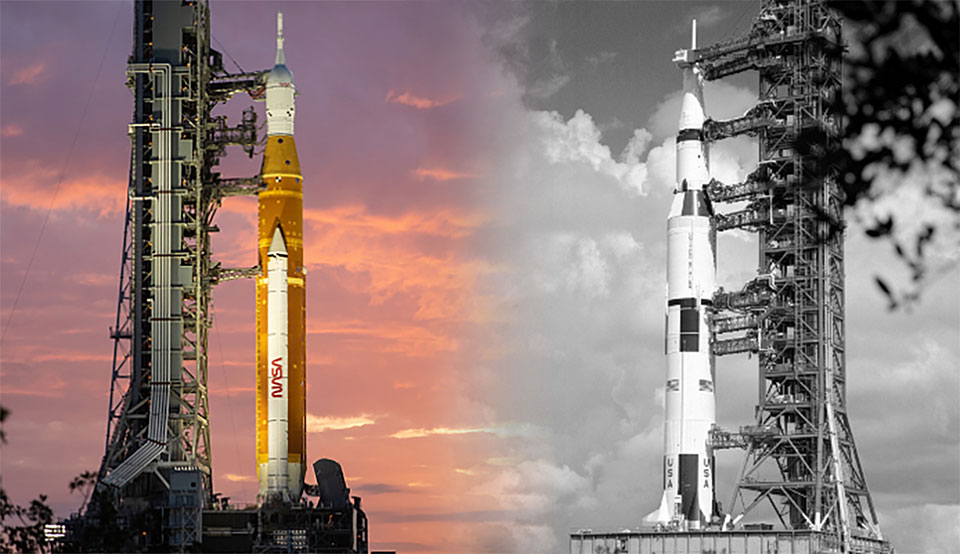
As we enter a new era of space exploration, NASA’s Space Launch System (SLS) rocket symbolizes humanity’s enduring quest to explore the unknown. It is the only proven, super-heavy-lift rocket capable of carrying both crew and cargo to lunar orbit in a single launch.
Boeing’s history supporting deep space initiatives dates back to the Apollo era, during which it, along with its heritage companies, built every element of the Saturn V rocket. This single-use vehicle was a marvel of its time. Today, Boeing continues to build upon this legacy through the design, development, test and manufacturing of the core stage, upper stage and avionics suite for the SLS fleet.
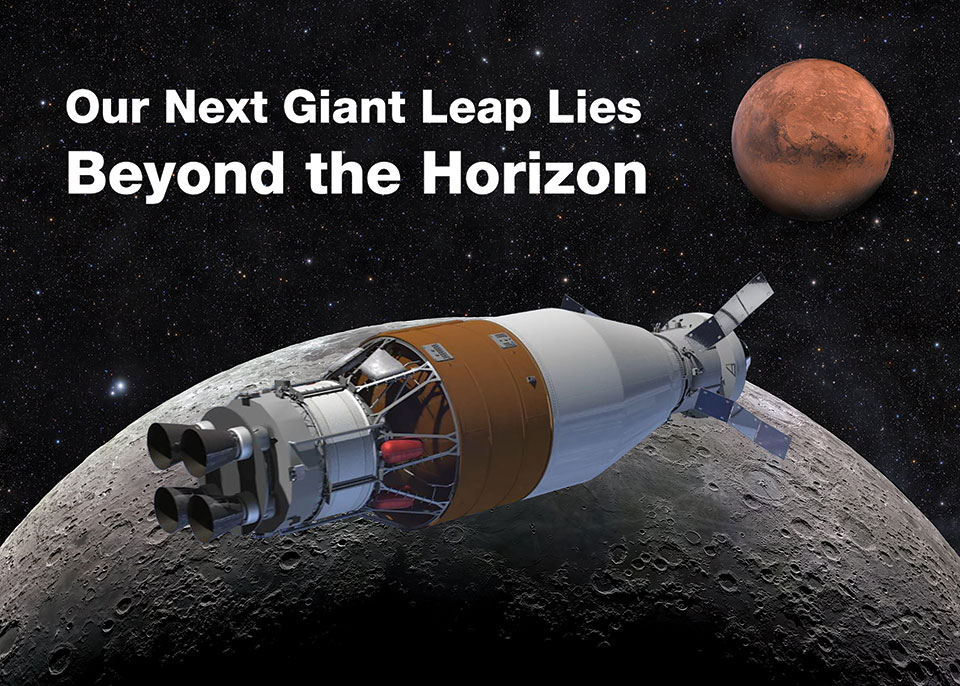
To fully utilize the capabilities of this new rocket, it’s imperative to leverage historical achievements while ensuring the potential of the SLS rocket, along with its Exploration Upper Stage (EUS) capabilities, is maximized for future missions.
The Saturn V Legacy
The Saturn V rocket was a groundbreaking achievement in aerospace engineering, serving as the backbone of NASA’s Apollo program, which successfully landed humans on the moon between 1969 and 1972. Standing 363 feet tall, the Saturn V could deliver 140 metric tons to low Earth orbit. Its three-stage design utilized powerful F-1 engines that generated an impressive 7.5 million pounds of thrust at liftoff, making it the most powerful rocket ever built.
The Saturn V rocket is renowned not only for its engineering achievements but also for the missions it enables. The Apollo program, including the historic Apollo 11 mission, showcased human ingenuity and provided invaluable scientific data about the moon.
Following Apollo, missions like the Viking landers and Voyager spacecraft further advanced our understanding of Mars and the outer planets. These missions provided critical insights into atmospheres, geology and potential for life. Present-day science missions largely center on expanding the foundational knowledge that was gathered during the Apollo era.
The legacy of these missions highlights the need for ongoing investment in science and exploration. NASA’s commitment to scientific discovery led to the development and use of SLS, which is essential for future deep space exploration efforts.